BirchNova Exterminating delivers targeted pest control service in Nashville to resolve active biological intrusions without saturating indoor living spaces with persistent synthetic toxins. Property owners across Davidson County require discreet, methodical remediation when dealing with local pest populations along the Cumberland River basin.
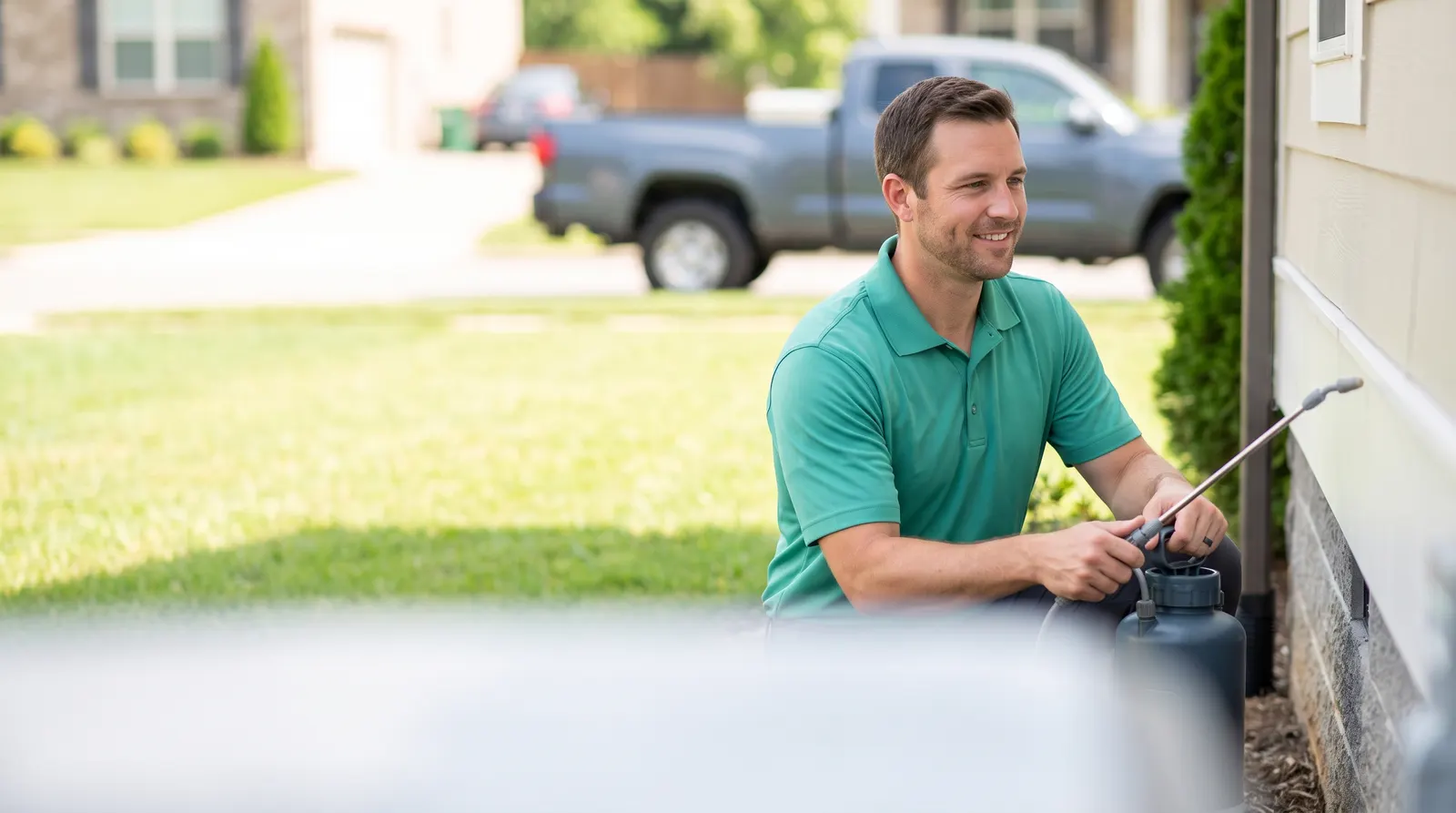
A pest control service in Nashville is an integrated biological and mechanical remediation service that inspects, excludes, and eliminates structural insects and rodents across Davidson County properties.
Every service reflects the same meticulous attention to detail, whether it's a single job or a larger pest control sevice project across Nashville.
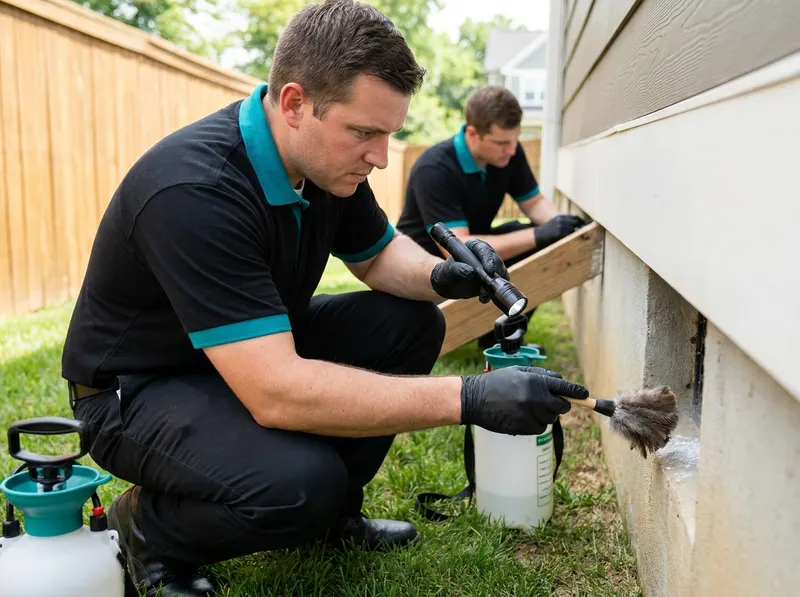
Brown recluse spiders (*Loxosceles reclusa*) inhabit undisturbed structural voids, cardboard storage boxes, drop ceilings, and fiberglass wall insulation across Middle Tennessee. Because their long legs keep their bodies elevated above floor surfaces, traditional residual surface sprays fail to deliver a lethal dose and can drive spiders deeper into living quarters. Our clinical remediation protocol involves deep-void micro-injection using low-impact inorganic desiccant dusts such as amorphous silica gel ( EPA registered formulations ) into wall cavities, attic floor joists, and subfloor perimeters. We complement void applications with intensive biological monitoring via specialized sticky interception boards placed flush along baseboards, behind large furniture, and near utility accesses to track population decline over time.
Get a quote →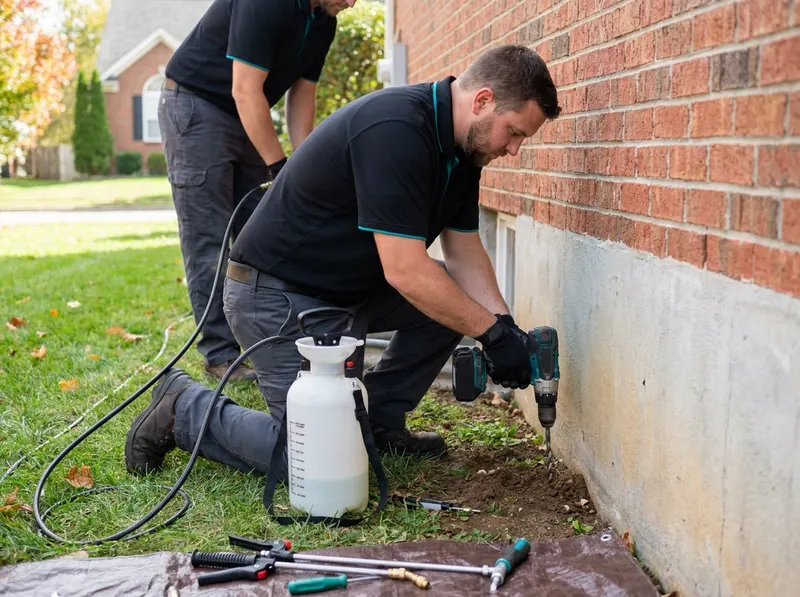
Native subterranean termites (*Reticulitermes flavipes*) build moisture-dependent shelter tubes out of soil and saliva to breach masonry foundation footings and subflooring throughout Davidson County. Remediation involves digging continuous trenches along foundation perimeters, drilling concrete slabs where necessary, and injecting non-repellent liquid termiticides compliant with structural standards outlined by the Tennessee Department of Agriculture Regulatory Services . These undetectable liquid barriers transfer horizontally between foraging workers, neutralizing colonies before structural framing sustains irreversible degradation. We also install tamper-resistant soil monitoring stations flush with turf lines to intercept exploratory subterranean activity around property perimeters.
Get a quote →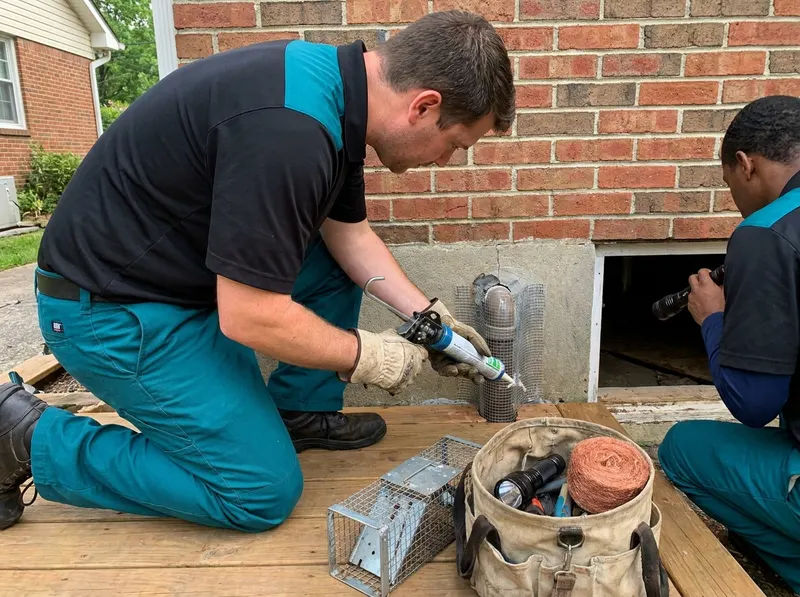
Norway rats (*Rattus norvegicus*), roof rats (*Rattus rattus*), and house mice (*Mus musculus*) exploit architectural voids, roof returns, weep holes, and plumbing transitions as autumn temperatures decline across Nashville. Structural rodent remediation prioritizes mechanical barrier defense: technicians install heavy-gauge galvanized 1/4-inch hardware cloth, copper wire mesh, and elastomeric silicone caulks to seal entry points larger than an eraser head. Inside attics and crawl spaces, we deploy snap traps mapped along established travel paths to eliminate resident populations without introducing foul-odor risks from toxic anticoagulant baits in wall voids. Tamper-resistant exterior bait stations positioned along foundational travel routes intercept exterior rodents before they breach the building envelope.
Get a quote →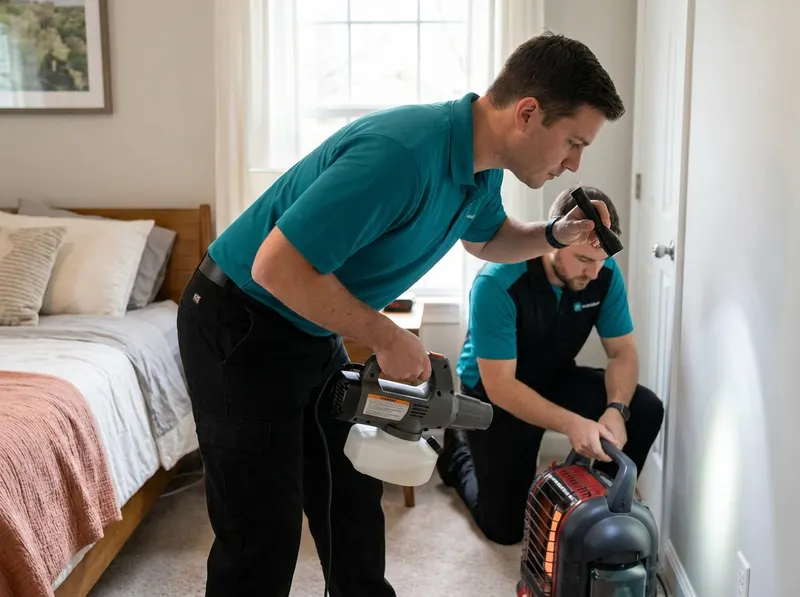
Bed bugs (*Cimex lectularius*) present significant health and sanitation challenges in residential and commercial settings across urban Nashville. Our clinical treatment protocols deploy high-output industrial electric heaters and axial air movers to elevate room temperatures to a sustained range between 122°F and 135°F, exceeding the thermal lethal limit for adult bed bugs, nymphs, and eggs as recognized by entomological standards from the Entomological Society of America . To guarantee long-term protection, we pair convective heat treatments with the surgical placement of non-staining insect growth regulators (IGRs) and amorphous silica desiccant dusts within electrical outlets, headboard joints, and baseboard crevices where heat transfer can be impeded by heavy wall studs.
Get a quote →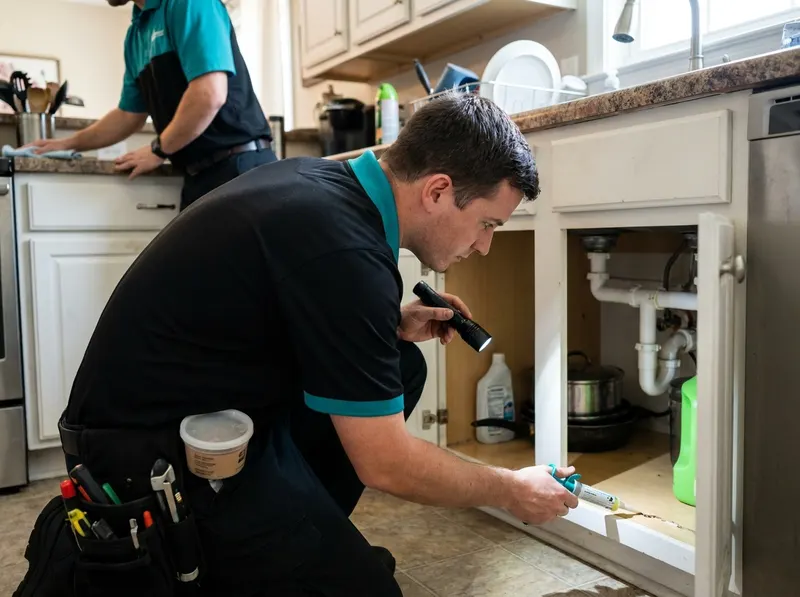
German cockroaches (*Blattella germanica*) and American cockroaches (*Periplaneta americana*) thrive inside commercial kitchens, multi-family utility chases, and damp residential bathrooms. Rather than utilizing airborne neurotoxic aerosols that trigger rapid colony budding and disperse nymphs across clean rooms, our technicians apply specialized bait matrices containing abamectin or indoxacarb into structural junctions, hinge plates, and appliance motor housings. These non-repellent formulations exploit natural aggregation behavior and coprophagy, allowing active ingredients to cascade through harborages. We coordinate moisture reduction protocols and integrate sticky insect monitoring traps to measure reduction curves accurately.
Get a quote →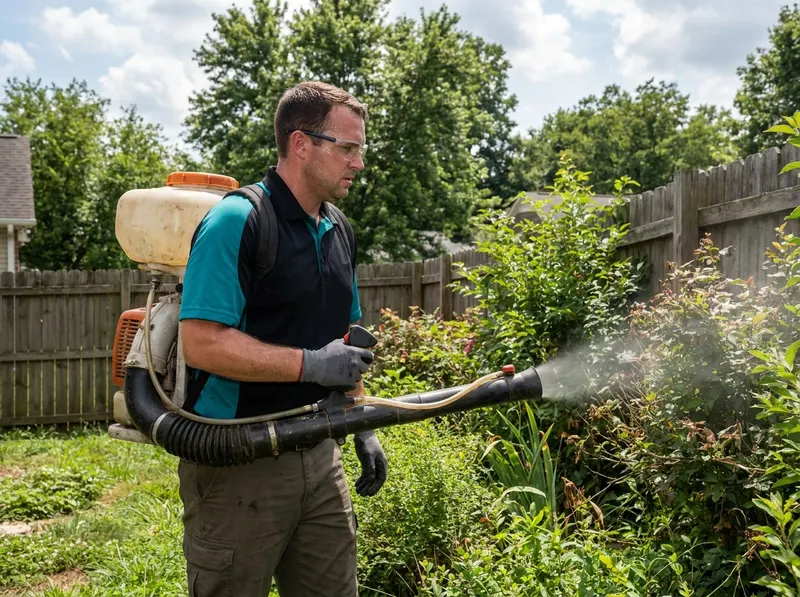
Properties situated near low-lying river corridors, wet shaded lawns, and greenways encounter heavy mosquito (*Aedes albopictus* and *Culex pipiens*) pressure throughout humid Middle Tennessee summers. BirchNova Exterminating executes targeted larval and adult suppression in strict accordance with vector guidance from the Centers for Disease Control and Prevention . We treat standing ground water, drainage basins, and low-lying landscape elements with biological larvicides formulated with *Bacillus thuringiensis israelensis* (BTI) to stop pupal emergence. For adult resting sites, technicians direct motorized micro-droplet misting applications containing low-toxicity synthetic pyrethrins or botanical oils specifically onto the undersides of dense foliage, ornamental shrubs, and shaded eaves.
Get a quote →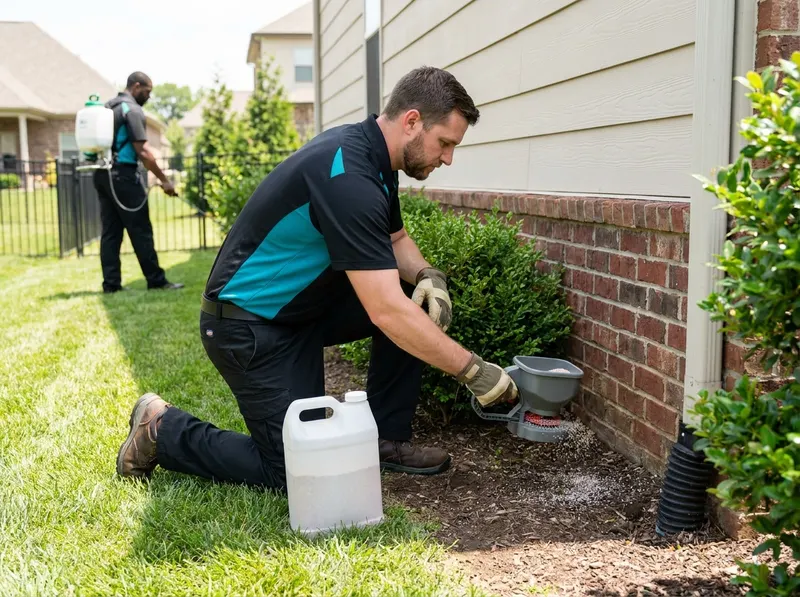
Odorous house ants (*Tapinoma sessile*) and carpenter ants (*Camponotus pennsylvanicus*) construct complex interior and exterior satellite colonies within hollow doors, subfloor framing, and damp wall voids near plumbing lines. Broad-spectrum pyrethroid sprays frequently trigger colony splitting, worsening indoor infestations. We counter this behavior by applying slow-acting liquid and gel baits balanced with proteins and carbohydrates that foraging worker ants transport back to deep queens. Along the exterior perimeter, we apply non-repellent liquid termiticides and insecticides around window sills, door frames, and foundation perimeters to prevent exterior trails from ascending structural masonry.
Get a quote →Elevated relative humidity in unconditioned crawl spaces creates hospitable conditions for subterranean termites, wood-destroying fungi, and wood-boring powderpost beetles (*Lyctinae*). Structural remediation requires full ground isolation utilizing high-tensile 12-mil or 20-mil puncture-resistant polyethylene vapor barriers, sealed with reinforced butyl tape across earth surfaces and foundation piers. We install rigid, insulated foundation vent covers to stop damp exterior air infiltration and install commercial-grade low-temperature crawl space dehumidifiers that maintain ambient relative humidity below 55%, complying with moisture standards supported by the U.S. Department of Housing and Urban Development .
Get a quote →You get a firm, itemized quote for your pest control sevice before any work begins, no surprises, no pressure.
Careful prep, tidy work, and a full cleanup when we are done. We treat your home and belongings like our own.
The same trusted, background-checked team from the first call to the final check.
Selecting an appropriate structural defense protocol depends directly on the biological profile of the target organism, the physical vulnerability of the structure, and the microclimate surrounding the foundation. When facing seasonal exterior invaders like American cockroaches, odorous house ants, or perimeter wolf spiders, choose an exterior micro-barrier application coupled with granular baiting along foundations, weep screeds, and sill plates. If the structure exhibits confirmed indoor sightings of cryptic arachnids such as brown recluses (*Loxosceles reclusa*) or active rodent intrusions in attic insulation, select an intensive structural exclusion and micro-dust void injection plan.
The primary trade-off between these interventions involves mechanical installation labor and physical attic access versus exterior-only chemical boundaries: exterior chemical boundaries cost less up front and suppress migrating surface populations, but they do not eliminate nested indoor colonies or seal architectural entry gaps larger than one-quarter of an inch. For commercial facilities, food-service venues, or residences adjacent to heavily wooded green belts like Percy Warner Park or Radnor Lake State Park, continuous quarterly biological surveillance fits best. In contrast, tightly sealed brick row houses in urban districts like Germantown often require only targeted physical exclusion, silicone-based sealing of utility penetrations, and perimeter bait stations.
Homeowners choosing between full thermal remediation and residual chemical treatments for bed bugs must weigh immediate single-day eradication against multi-visit schedules: convective heat penetration reaches thermal death points behind baseboards and within dense mattress fabrics instantly, whereas targeted chemical applications require two to three follow-up cycles across thirty days to neutralize newly emerged nymphs. When evaluating crawl space dampness, installing a continuous 12-mil reinforced vapor barrier paired with an energy-efficient dehumidifier resolves high relative humidity that attracts subterranean termites and wood-boring beetles, whereas surface fungal washes provide temporary spore clearance without correcting the fundamental moisture gradient driving wood rot. BirchNova Exterminating advises property managers to align their treatment selection with verifiable biological evidence gathered during an initial physical assessment.
You can discuss specific pest pressures or schedule a diagnostic evaluation by calling (615) 537-0361.
Every project gets a firm, written price after a free on-site visit. Ranges below for orientation.
Tell us about your pest control sevice job and we'll send a clear, written quote, usually the same day. Or just call and talk to a real Nashville pro.
(615) 537-0361
Nashville properties face persistent biological pest challenges generated by the intersection of dense limestone bedrock, shallow topsoil layers, and the persistent humidity of the Cumberland River basin. In historic neighborhoods like East Nashville, Belmont-Hillsboro, and Germantown, turn-of-the-century architecture features stacked-stone or rough masonry foundations over unsealed, damp crawl spaces. These dark, unconditioned microclimates generate relative humidity readings consistently above 70%, creating optimal harborage zones for native subterranean termites and massive populations of brown recluse spiders that migrate upward through interior partition walls. Conversely, suburban districts such as Green Hills, Crieve Hall, and Sylvan Park are defined by mature oak and hickory canopies that overhang rooflines, providing tree-dwelling roof rats, carpenter ants, and paper wasps direct aerial access to soffits, fascia boards, and attic louvers. Heavy ground cover in parcels bordering Percy Warner Park, Shelby Bottoms Greenway, and our team maintains saturated organic duff where American cockroaches and field mice forage before moving toward residential foundations during autumn cool fronts. In rapid urban infill corridors like The Nations and 12 South, sustained commercial and residential excavation disturbs dormant rodent burrow networks, driving displacement into established residential perimeters. Effectively managing pests in Davidson County demands continuous mechanical exclusion, moisture remediation, and precise target applications grounded in the unique architectural ecology of each neighborhood. BirchNova Exterminating provides tailored remediation across all these communities, coordinating service through local dispatch at (615) 537-0361.
Free estimates for Nashville & the surrounding area.
 BirchNova Exterminating